
MjLink Cannabis Business News and Press
California is the largest cannabis market in the U.S., but it also is the state market that arguably has grappled with the greatest challenges since adult-use legalization rolled out there Jan. 1, 2018.
With a many-decades-long history of cannabis cultivation and a largely unregulated medical cannabis market that thrived for nearly a quarter-century since the passage of Proposition 215 (also called the Compassionate Use Act of 1996), California had become home to more than 68,000 cannabis farmers, as Cannabis Business Times reported in 2018. The state’s cannabis market was predominantly comprised of smaller, family-run cannabis farms and dispensaries, and it began crumbling under the weight of the adult-use regulatory structure and accompanying costs (licensing and testing fees, and exorbitant taxes).
Not unrelated, the state’s illicit market continues to dominate cannabis sales by the billions of dollars. In late 2019, The Motley Fool reported on estimates that projected legal cannabis sales would fall $5.6 billion short of illicit-market sales that year.
Now, more than two years into the state’s adult-use program, the struggle continues, and unless things change, the future of the state’s legal market is grim, says Hezekiah Allen, a former cannabis grower who has an extensive history in the California market.
Allen is perhaps most well-known for his work as executive director of the California Growers Association (CGA) from 2015-2018, where he advocated and lobbied for legislation that protected the state’s extensive cannabis heritage, including its smaller, family-run farms. He had formed HDA Public Affairs in 2010 to separate and protect himself and his then-gray-market grow from his lobbying and advocacy work.
Today, in addition to still operating HDA Public Affairs, Allen spends the bulk of his time working with Emerald Grown, a corporation of California cannabis cooperatives whose “goal is to get the farmers’ products to market and maximize the returns to the farmer,” he says. The organization has agreements with about 45 growers, Allen adds.
Three lawsuits allege a cannabis entrepreneur defrauded investors by failing to pay back $1.2 million in loans.
Solace Holdings LLLP, Aether Gardens and Telloni Holdings Limited filed the lawsuits against entrepreneur Case Mandel and his companies Cannadips LLC and Trinidad Consulting LLC in the U.S. District Court for the District of Nevada, and state courts in Nevada and California.
The lawsuits allege that Telloni provided Mandel and Trinidad a loan of $500,000 in July 2018 and, in early 2019, increased the loan amount to Mandel and his businesses to $1 million. Then, around July 2019, the plaintiffs offered the defendants a “Bridge Loan” of $200,000.
“Under the terms of the Bridge Loan, the parties agreed that the $200,000.00 would be paid-back-in-full after three months with all accrued and unpaid interest,” the lawsuit filed in California reads.
Paul D. Turner, an attorney representing the plaintiffs, said the borrowed money with interest was due in October 2019, but his side didn’t file its first lawsuit until February 2020.
“We were trying to explore a possibility of figuring out what had gone so horribly wrong [before we filed the lawsuit]. Is there a fix, can we get paid, can we protect this multimillion-dollar investment? We went into that phase,” Turner said. “Obviously, we filed not one, not two, but three lawsuits under various contracts because we came to the conclusion that this investment could just fall apart, and we would be left holding a bag with nothing in it.”
VANCOUVER, BRITISH COLUMBIA – April 6, 2020 -- Rubicon Organics Inc. has announced that it has completed the sale of its 40,000 sq. ft. hybrid greenhouse in Ferndale, Wash., for US$8.5 million to a group of real estate investors. Proceeds from the sale will strengthen the company’s balance sheet, providing working capital to ramp-up production and sales across Canada.
“The sale of the Washington greenhouse is an important step in focusing the company on our core strength of bringing super-premium certified organic cannabis to the Canadian market,” said Bryan Disher, Chairman of the Board. “This transaction creates tremendous value for our shareholders by achieving a clean and timely exit from the U.S., while accelerating our timeline to profitability through focusing exclusively on our high-return Canadian operations.”
Rubicon Organics will continue to sell its remaining U.S. assets, which consists of a 3-acre land parcel in Greenfield, Calif., and certain cannabis extraction equipment. The company expects to complete the dispositions of all cannabis-related U.S. assets in the coming months.
The buyers are led by the cannabis license holder who has leased the facility from Rubicon Organics since November 2018 and includes Jesse McConnell, Rubicon Organics’ CEO, who also holds a minority interest in the buyer entity. In accordance with good corporate governance practices, Rubicon Organics formed a Special Committee, comprised entirely of independent directors, who supervised the negotiation of the transaction and recommended the transaction for approval to the full Board.
As part of the transaction, Rubicon Organics settled the US$3.0 million secured debt on the facility.
]]>While many U.S. states have issued guidance to address the COVID-19 pandemic, Dr. Anthony Fauci, the nation’s top infectious disease expert, told CNN last week that the governors who have not issued statewide stay-at-home orders “really should” take action to slow the spread of the virus.
President Donald Trump, on the other hand, has largely advocated for each state to take its own approach, but Fauci’s message could indicate the inevitability of a federal stay-at-home order as the public health crisis evolves.
Should federal guidance come into play, what would this mean for cannabis businesses operating in a federally illegal industry?
First and foremost is the question of whether the federal government can legally issue a stay-at-home order in the first place.
“I think there’s still a question [of] if the federal government has the authority to issue a shutdown order,” Karen O’Keefe, director of state policies for The Marijuana Policy Project (MPP) and the MPP Foundation, tells Cannabis Business Times. “I saw that there are some general classifications of what constitutes an essential service and what does not for the federal government, and at least one state that was relying on that used those definitions to include medical cannabis as something that could stay open because pharmaceutical and medical facilities can stay open. … Certainly, my hope and expectation would be … a general mandate to keep open businesses that provide medications, and then that would include medical cannabis.”
Ontario’s cannabis retailers are allowed to reopen with delivery and in-store pickup services under an April 7 emergency order, according to a BNN Bloomberg report.
This is welcome news for dispensaries that were told last week that they had been removed from the province’s list of essential businesses, which effectively shut the stores down until further notice.
Following advice from its Chief Medical Officer of Health, Ontario updated its list of essential businesses April 3, omitting cannabis retailers from the roster of businesses that could remain operational during the province’s COVID-19 response.
Prior to the updated emergency order, cannabis retailers had been operating as essential businesses, but the change left the Ontario Cannabis Store, the province’s government-owned online retailer, as the only outlet authorized to serve Ontario’s patients and consumers.
“Ontario and Alberta are both similar and a little bit unique in that the only legal online retailers are owned by the government,” John Carle, executive director for the Alberta Cannabis Council, told Cannabis Business Times. “Their regulator and our regulator both own an online cannabis retail website, and they’re the only ones allowed to sell it online. They’re the only ones that are allowed to deliver product to homes. So, people [could] still get their cannabis—they just [had] to do it through the government website.”
Indiana University researchers have presented data that suggest cases of electronic cigarette or vaping-associated lung injury (EVALI) are more prevalent in states that do not have adult-use dispensaries.
The study was published in JAMA: The Journal of the American Medical Association on April 6 by researchers from Indiana University’s School of Medicine and O’Neill School of Public and Environmental Affairs. It is titled “Association of State Marijuana Legalization Policies for Medical and Recreational Use With Vaping-Associated Lung Disease.”
“The data suggest that EVALI cases were concentrated in states where consumers do not have legal access to recreational marijuana dispensaries,” the study reads. “This association was not driven by state-level differences in e-cigarette use, and EVALI case rates were not associated with state-level prevalence of e-cigarette use. One possible inference from our results is that the presence of legal markets for marijuana has helped mitigate or may be protective against EVALI.”
The researchers analyzed data from all 50 states and Washington, D.C. This included data on reported EVALI cases from 2019 from the Centers for Disease Control and Prevention (CDC); population data from 2017 from the Surveillance, Epidemiology, and End Results database; and estimates of e-cigarette use in 2017 from the Behavioral Risk Factor Surveillance System, according to the study.
States with adult-use programs had 1.7 EVALI cases per million people, while states with medical programs had 8.8 cases per million and states with prohibition in full effect had 8.1 cases per million, according to the study.
The study also asserts the following: “A test of the difference in mean case rates implies that recreational marijuana states have 7.1 … fewer cases per million than medical marijuana states … and 6.4 … fewer cases per million than prohibition states. … The difference in the EVALI case rate between medical and prohibition states was not statistically significant.”
Last month, Canadian cannabis operators were outraged when Export Development Canada (EDC) and the Business Development Bank of Canada (BDC) initially said that the industry would not qualify for business loans and other assistance aimed at boosting the economy during the COVID-19 crisis.
Since that time, the BDC has worked with the industry to amend its policies and has officially clarified its stance.
In an April 6 statement, the BDC said that all legal businesses will be eligible for the Business Credit Availability Program (BCAP), which includes access to the Canada Emergency Business Account and the SME Loan and Guarantee Program.
“When the policy was originally written, cannabis was not included as an industry that would qualify for it,” John Carle, executive director for the Alberta Cannabis Council, told Cannabis Business Times. “In our conversations with the government and the BDC, it wasn’t a specific exclusion, it was just that the policies and exclusions were written before our industry existed. It took us about two or three weeks to get them to adjust the policy to address our sector. … [Then] they didn’t specify industries, they just [allowed] everybody [to qualify], which was a really good thing for everybody.”
“We were very excited about BDC,” added Nathan Mison, VP of Government, Media & Stakeholder Relations for Fire & Flower, which operates dispensaries across the country. “I think it was really important to have the cannabis sector to be treated like every other business in Canada, so we were glad that all the other instruments provided to every other business were made available to the cannabis sector.”
Prior to the domestic outbreak of COVID-19, the U.S. cannabis industry was in the midst of a liquidity crunch. Publicly traded companies experienced falling stock prices in multiple phases throughout 2019 and Q1 2020. Companies depleted available operating cash faster than could be replenished, with ever fewer capital sources to reload. Existing capital providers largely pivoted from equity to expensive, and often onerous, debt structures. Some companies took proactive and timely steps to conserve cash, consolidate operations and monetize assets like real estate through sale-leaseback arrangements before there was a hint of an oncoming pandemic. Others did not or could not.
Many companies expanded too quickly and thinly across geographies without growing their existing businesses with a focus on internal capitalization, making a shakeout in the industry inevitable. Following this pandemic, hopefully, a more mature industry will emerge with more efficient companies focused on organic growth and accretive deal-making.
COVID-19 has affected every person and every business in the U.S. in some small or tragically large way. Further, the virus is likely to upend efforts in several states looking to legalize cannabis through ballot measures in the 2020 election cycle by hindering signature gathering and diverting focus away from this issue.
But not all of the effects on the cannabis industry are negative. Most medical and adult-use cannabis businesses have initially been deemed “essential businesses” by states with regulated cannabis programs that have also issued emergency orders. In addition, demand for cannabis shows signs of being inelastic, suggesting that the industry may be resilient to economic downturns. The pandemic will exacerbate existing liquidity issues as investors go into safety mode.
Concurrently, the downturn may accelerate the demise of some companies, while creating opportunities for stronger companies and risk-loving private investors. Unfortunately, those small to mid-sized private companies who saw institutional-level capital availability on the horizon will be competing with 20-40% discounted blue-chip stocks with 3-6% dividend yields for attention in the eventually rebounding capital markets. Repriced former line-leaders whose previous valuations set the bar for private companies, will now be used to a comparative detriment to those raising capital in a pinch.
Cannabis Businesses Deemed Essential
Charlotte Figi, the young girl whose medical condition inspired the Stanley Brothers to develop the low-THC strain Charlotte’s Web, has died due to COVID-19. She was 13.
According to KRDO, multiple members of her family have tested positive for the disease.
“Charlotte is no longer suffering,” photographer Nichole Montanez wrote on behalf of the Figi family. “She is seizure-free forever. Thank you so much for all of your love.”
In 2013, the first installment of CNN’s Weed documentary shined a bright light on Figi’s story. When she was only a few months old, Figi began experiencing terrible seizures. By 2, she was diagnosed with Dravet Syndrome, a rare form of intractable epilepsy. Her prescription medications added up, both financially and physiologically; the toll on her body was severe.
By 5, Figi was suffering through 300 grand mal seizures each week.
This was in 2012, and by that point medical cannabis was not fully accepted by American physicians. The Figi family was told to continue on with other medication, but soon her father found a video of a young boy in California with Dravet Syndrome. He was being treated with cannabis. It seemed to work.
A coalition of U.S. Senators sent a letter to leadership March 26, asking that the Small Business Administration (SBA) extend economic assistance to the cannabis industry.
Last month, President Trump instructed the SBA to allocate $50 billion to low-interest loans to help small businesses during the COVID-19 pandemic, but cannabis businesses were excluded from these relief efforts.
“Because federal law prohibits the sale and distribution of cannabis, the SBA does not provide financial assistance to businesses that are illegal under federal law,” Carol Chastang, SBA public affairs specialist, told Cannabis Business Times at that time. “Businesses that aren’t eligible include marijuana growers and dispensers, businesses that sell cannabis products, etc., even if the business is legal under local or state law.”
In their letter, Michael Bennett (D-CO), Cory Booker (D-NJ), Tammy Duckworth (D-IL), Kirsten Gillibrand (D-NY), Kamala Harris (D-CA), Edward Markey (D-MA), Robert Menendez (D-NJ), Jeffrey Merkley (D-OR), Jacky Rosen (D-NV), Bernie Sanders (I/D-VT) and Ron Wyden (D-OR) urged their fellow lawmakers to allow state-legal cannabis businesses to access loans and other forms of economic assistance from the SBA.
Specifically, the senators requested that lawmakers include language in the forthcoming appropriations bill that prohibits the SBA from denying loan applications from licensed cannabis businesses for the 7(a) Loan Guarantee Program, Disaster Assistance Program, Microloan Program and 504/Certified Development Company program.
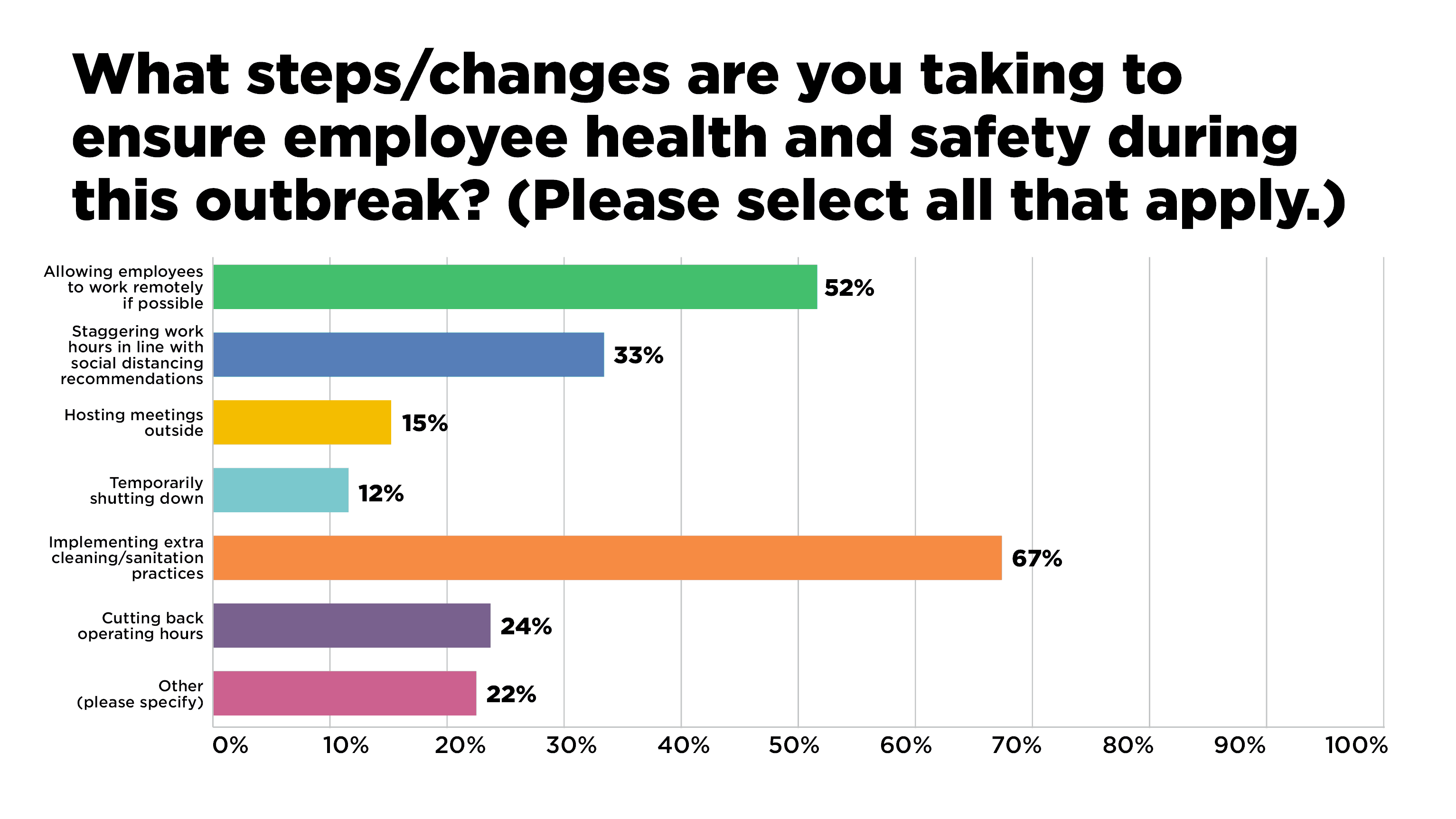
The COVID-19 pandemic has had a significant impact on the day-to-day operations of cannabis cultivators, dispensaries and industry suppliers, according to recent survey conducted by Cannabis Business Times at the end of March.
More than half of participants (54%) responded “a great deal” or “a lot” when asked “How much of an impact has the COVID-19 outbreak had on your operation?” Only 5% of participants said the outbreak did not have any effect on their businesses.
Participants included cultivators and vertically integrated cannabis companies (48%), medical and adult-use dispensary representatives (30%), processors (15%) and suppliers (10%).
Nearly three-fourths of cannabis companies surveyed reside in areas that are under a stay-at-home mandate. However, 76% indicated their companies are still providing normal services, and 64% live in areas where cannabis businesses are considered essential, which has boded well for many in the industry.
“So far in Oregon, there has been very little day-to-day change for our business as cannabis was deemed an essential business operation,” one participant wrote in a comment section. “However, we are paying close attention and taking this day by day. Folks are buying cannabis products now, but if many continue to be out of work, who knows what that will do to the market.”
When it comes to staffing changes, results are a mixed bag, as 52% reported no change, 29% have had to reduce employee hours and 13% have had to lay off employees. Another 5% have actually increased staff hours during the pandemic.
Our media team at Cannabis Business Times, Cannabis Dispensary, Hemp Grower and Cannabis Conference is pleased the announce the launch of the Risk Mitigation Virtual Conference—the first in a series of virtual events throughout 2020 that will bring the industry-leading education right to your home or office.
The Risk Mitigation Virtual Conference will be held April 23, 2020 from 1 p.m. to 4:15 p.m. EDT. The event will be free to registrants, who will hear from cultivation and dispensary operators and other industry experts on the following topics:
• How to Create a Disaster Preparedness Plan
• Lessons Learned from the COVID-19 Outbreak
• Critical Finances - Protecting Your Cash Flow
The cannabis industry has not been immune to 2020’s unprecedented global challenges to human health and economies. In fact, it has proven to be an essential service in these trying times to provide cannabis medicine to those in need.
As the coronavirus continues to permeate every corner of daily life, it’s led to a crossroads for the newly developing cannabidiol (CBD) industry.
At a time when consumers are focusing on their health, searching for anxiety-easing solutions and ramping up their self-care routines in quarantine, CBD seems perfectly situated to fit the bill.
But some alternative forces are at play. As CBD slowly steps into the mainstream, it exposes itself to broader commercial disruptions of closing retailers and supply chain hang-ups amid new economic pressures.
Those who have an online presence have fared well so far, but smaller companies and those without online sales may have greater challenges ahead.
Consumer Interest and Trends
Of all the confusion revolving around COVID-19, at least one thing is certain: Consumers are stockpiling necessities.
Hemp businesses will have access to the U.S. federal government’s new small business loan packages, the Paycheck Protection Program and the Economic Injury Disaster Loan Program. Each loan structure offers different things at different rates. Check out our guide to the new federal stimulus funding here.
But eligibility is one thing. Along the way, hemp business owners would do well to keep in mind the learning curve that their industry presents. Hemp (and all of its attendant supply chain links and chemical compounds) is a new crop in the eyes of the law. Regulated banks and even commercial lenders, no doubt, will be extra cautious in working with the industry.
“The industry will need to educate many of these lenders, many of these bankers,” said Scott Moskol, partner and co-chair of the Cannabis Business & Law Advisory group at Burns Levinson, which ran a webinar on this topic with the team at Vicente Sederberg April 3. (Watch the full webinar below.)
Hemp growers will need to explain in detail what their particular license type allows them to do. Even terms like “isolate” and “biomass” may need to be spelled out.
The same hurdle that law enforcement agencies are jumping is in play here, too: Hemp and state-licensed cannabis plants (“marijuana,” in some terminology) are both Cannabis sativa L., a Schedule-I substance. Hemp, of course, becomes hemp when the plant’s THC content hits 0.3% or lower. This may seem like the sort of elementary facts that each grower must know before they decide to get into the space, but bankers and lenders may not be as familiar.
When maintaining your records, be as clear as possible.
After cannabis businesses were deemed essential in nearly every state in which vertically integrated multistate operator Curaleaf operates, VP of Retail Chris Melillo felt a greater responsibility to create a safe environment for the company’s patients, customers and employees.
“Everybody’s going through a lot right now,” Melillo tells Cannabis Business Times. “None of us have a roadmap or a game plan of how to address this. We’re all leaning on courageous leadership and … experience from crisis management in the past, and really just trying to absorb that responsibility, calm your team and be there for your patients.”
Curaleaf operates 54 dispensaries across 17 U.S. states and has maintained strict compliance with each jurisdiction’s sanitation and social distancing requirements. The company has set new SOPs to adjust to these uncertain times, but Melillo says making a standard, one-size-fits-all policy across all its operations has been difficult.
“You’re really over-indexing and getting pretty granular state by state to make sure that the changes that you make apply to all,” he says.
The company’s internal SOPs are designed to exceed each state’s minimum requirements, Melillo says, and Curaleaf’s management teams have been instructed to ensure that the company’s cleaning standards are followed in each of its facilities.
Effective immediately, the U.S. Drug Enforcement Administration (DEA) has descheduled GW Pharmaceuticals’ Epidiolex, an anti-epileptic drug that contains cannabidiol (CBD).
Initially, following approval from the DEA in 2018, Epidiolex was listed under Schedule V.
At the time, many industry stakeholders stressed that this move did not reschedule CBD alone as a Schedule-V substance. CBD, as a single compound, remained under Schedule I with the rest of the cannabis plant. (Shortly after Epidiolex was approved, the U.S. Congress passed the 2018 Farm Bill and legalized hemp. CBD derived from hemp, then, was removed from the list of controlled substances. Still, CBD derived from cannabis plants that contain more than 0.3% THC remained Schedule-I.)
By then, though, the fact that CBD was listed as an active ingredient in an approved pharmaceutical drug prevented it from being added freely to food and beverages. It would be comparable to adding acetaminophen to a latte: not permitted under federal law.
Thus, the U.S. Food and Drug Administration began its ongoing quest to understand and regulate CBD. This process continues to this day, leaving CBD product manufacturers in a sort of limbo as hemp producers and state-legal cannabis growers operate further up the supply chain.
In the meantime, the Schedule-V classification for Epidiolex began to change the way that regulators might conceive of a drug that contains CBD. Those drugs are seen as having a proven medical use and a low potential for abuse (like Robitussin-AC, for another example, which contains codeine and is listed under Schedule V).
Smart and Safe Arizona is one of four ballot initiative campaigns in the state that filed a petition April 2 to ask the Arizona Supreme Court to allow the campaigns to gather electronic signatures amid the COVID-19 crisis, according to Ballotpedia.
The petition asks the court to allow Smart and Safe Arizona, Arizonans for Second Chances, Invest in Education, and Save Our Schools Arizona to collect signatures digitally through E-Qual, the state’s online signature collection platform. E-Qual is currently available for federal, statewide and legislative candidates, but not for ballot initiatives, according to Ballotpedia.
No states currently allow ballot initiative campaigns to collect signatures electronically, and the Arizona campaigns are not the first to face obstacles due to the coronavirus outbreak; at least 15 campaigns in eight states have suspended their signatures drives as of April 2, Ballotpedia reported.
Smart and Safe Arizona had collected more than 320,000 of the 356,467 required signatures as of March 27, according to a Tuscon.com report, although only 237,645 were valid.
The Ohio Board of Pharmacy issued guidance April 3 that allows the state’s medical cannabis dispensaries to offer curbside pickup to their customers during the COVID-19 crisis.
Under the new rules, retailers can conduct medical cannabis sales in their parking lots or on the sidewalks outside of their stores, so patients do not have to enter the dispensary or even leave their cars. Dispensaries can also offer sales at walk-up or drive-thru windows, but all transactions must occur on the dispensary’s property and must be under the coverage of the dispensary’s security cameras, according to the guidance.
Delivery is still prohibited under the new rules.
Last month, the Ohio Board of Pharmacy issued additional guidance to help the state’s patients maintain access to medical cannabis during the COVID-19 outbreak, including a temporary expansion of caregiver registration, new photo identification requirements, and rules that allow patients and caregivers to place phone orders with dispensaries.
Up until the April 3 rule change, however, all patients still had to enter a dispensary to pay for and pick up their medical cannabis products.
When Global Cannabinoids CEO Ryan Lewis saw increased demand for hand sanitizer in the early days of the COVID-19 outbreak, he immediately saw an opportunity to transition his CBD operations to hand sanitizer production to help address the supply shortage.
“In January, while we were analyzing search results online, we noticed a spike in hand sanitizer,” Lewis tells Cannabis Business Times. “We were looking at consumer products in certain categories that we could potentially add cannabinoids into, like animal health products, skincare products, personal care products [and] cosmetics. So, we see hand sanitizer. … Places are selling out. Prices are going up. [We said], ‘You know what? Let’s launch a CBD hand sanitizer.’”
Global Cannabinoids, a B2B producer, manufacturer and distributor of American-grown, hemp-derived cannabinoids, then formed a new entity, Global Sanitizers LLC, and directed its large supply of ethanol to hand sanitizer manufacturing.
While Global Sanitizers had no shortage of the ethanol used in its hemp extraction process, only certain types of ethanol, 40-B and 3-C denatured ethanol, are approved by the FDA for topical use, Lewis said. The company worked quickly with its partners to secure hundreds of thousands of gallons of these types of ethanol, and sent CBD to its manufacturing facilities to produce the infused sanitizer in bulk.
Global Sanitizers’ line of hand sanitizers is now being sold to big box retailers under the “Medically Minded” brand, and in the past week alone, the company has secured over $15 million in orders.
This week, a proposal to legalize adult-use cannabis was stripped from the New York state budget after Gov. Andrew Cuomo said there was “too little time” to fine-tune the plan ahead of an April 1 deadline to approve the sprawling budget. Elsewhere, in Mexico, Senators have asked the Supreme Court to extend an April 30 deadline for lawmakers to draft a cannabis legalization bill.
Here, we’ve rounded up the 10 headlines you need to know before this week is over.
Federal: The National Institute of Drug Abuse (NIDA) has released a request for information, inviting comments from “the scientific community and other interested parties,” to help establish a standard dose for THC to improve cannabis research. Responses to this request for information must be submitted electronically and received by May 1, 2020. Read moreOhio: As part of its coronavirus response, the Ohio Medical Marijuana Control Program has issued new guidance to help patients maintain access to medical cannabis. Medical cannabis dispensaries are considered essential and can remain open under the state’s stay at home order, but the Board of Pharmacy has announced temporary guidelines to help keep patients and dispensary employees safe during the pandemic. Read moreMassachusetts: The Cannabis Control Commission has indicated that the state’s medical cannabis dispensaries will be able to provide curbside pickup to patients and caregivers during the coronavirus outbreak. Last week, Gov. Charlie Baker deemed medical cannabis businesses essential, allowing them to remain open as the state responds to the pandemic, but as of March 28, retailers must conduct sales electronically or over the phone and dispense medical cannabis products either in the facility’s parking lot or at the entrance of the dispensary. Read moreIllinois: Gov. J.B. Pritzker has signed an executive order that extends the deadline for cannabis infuser, craft grower and transporter license applications from March 30 to April 30. All applications must now be submitted by certified mail by April 30, and licenses will ultimately be awarded by July 1. Read moreMissouri: Missourians for a New Approach is up against a May deadline to collect enough signatures for a petition to place an adult-use cannabis legalization initiative on Missouri’s November ballot, but the coronavirus pandemic could very easily spell doom for these efforts. Missouri law does not allow for the electronic collection of signatures, but Missourians for a New Approach is currently assessing other options to keep the campaign afloat. Read moreMinnesota: Gov. Tim Walz issued an executive order March 31 that extends medical cannabis enrollments for patients to limit the spread of COVID-19. Patient enrollments are extended until Aug. 1 or 60 days after Minnesota’s peacetime emergency ends, whichever is later. Read moreCalifornia: An audit of Los Angeles’ cannabis licensing process has determined that the city took “reasonable and appropriate” steps to ensure fairness. A city official is now recommending that the city’s Department of Cannabis Regulation move forward with awarding final licenses to cannabis retailers, who have been waiting since the licensing process was suspended last year. Read moreNew York: A proposal to legalize adult-use cannabis was stripped from the New York state budget after Gov. Andrew Cuomo said there was “too little time” to fine-tune the plan ahead of an April 1 deadline to approve the sprawling budget. As in many other areas of the country, the COVID-19 crisis has stolen the spotlight in New York, and Cuomo has been placing his attention on the virus since the state’s first confirmed case was reported March 1. Read moreOklahoma: Rep. Scott Fetgatter has announced plans to begin work on an adult-use cannabis legalization bill, saying a taxed and regulated market would provide a new source of revenue for the state in the wake of the COVID-19 pandemic. Several groups are competing to bring adult-use cannabis legalization initiatives to Oklahoma’s November 2020 ballot in the form of SQ 807, SQ 808 and SQ 811, but Fetgatter has indicated that the petitions will likely be unsuccessful, especially in the wake of the coronavirus outbreak. Read moreInternational: Senators in Mexico have asked the Supreme Court to extend an April 30 deadline for lawmakers to draft a bill to legalize and regulate cannabis for medical, adult and industrial uses. Both the Senate and the Supreme Court have suspended many legislative procedures until at least mid-April due to the COVID-19 outbreak, and many lawmakers have indicated that this will cause them to miss deadlines to pass certain bills, including the cannabis legislation, which has been stalled since three Senate committees approved the bill last month. Read more