MjLink Cannabis Business News and Press
TORONTO, May 04, 2020 (GLOBE NEWSWIRE) -- PRESS RELEASE -- Aleafia Health Inc.’s wholly owned subsidiary Emblem Cannabis Corp. has secured a Health Canada License Amendment for its Paris facility’s 30,000-square-foot Phase II expansion, entirely dedicated to the extraction, production, packaging and distribution of finished cannabis products.
“The Phase II expansion, our crown jewel, permits an exponential increase in our ability to produce and sell high-margin cannabis health and wellness products in the medical, adult-use and international markets,” said Aleafia Health CEO Geoffrey Benic. “The Paris facility’s state-of-the-art expansion, purpose built to meet EU-GMP standards, creates a unique competitive advantage with significant barriers to entry. Coupled with our ultra-low-cost outdoor cultivation, it sets us apart in the cannabis industry. This means greater breadth of formats, greater scale and automation, and ultimately higher margins as we utilize cannabis grown outdoors through our integrated production ecosystem.
“This breakthrough also accelerates our Cannabis 2.0 strategy and will allow us to produce new differentiated product formats. We have been preparing for months and have ordered equipment, completed formulations and have built up a large inventory of cannabis extracts to be used as input material for new formats for immediate use in the new facility. Now it’s time for execution.”
The Paris facility license amendment, granted on May 1, 2020, authorizes cannabis production in the entire expanded building. The company expects to commence production and packaging operations at the Phase II expansion in the next two weeks.
Production Ecosystem
VICTOR, N.Y. and SMITH FALLS, Ontario, May 01, 2020 (GLOBE NEWSWIRE) -- PRESS RELEASE -- Constellation Brands, Inc., a beverage alcohol company, and Canopy Growth Corporation, a diversified cannabis company, have announced the exercise by Greenstar Canada Investment Limited Partnership, an indirect, wholly-owned subsidiary of Constellation Brands, of an aggregate of 18,876,901 warrants to purchase common shares of Canopy Growth.
The warrants, which were originally issued on Nov. 2, 2017, were exercised at an exercise price of C$12.9783 per common share for an aggregate of approximately C$245 million. Upon issuance, the common shares represented approximately 5.1% of the issued and outstanding common shares of Canopy Growth. As a result of the acquisition of new common shares, Constellation Brands now indirectly holds, in the aggregate, 142,253,802 common shares, 139,745,453 warrants to purchase common shares and C$200,000,000 principal amount of senior notes. Collectively, the common shares increase Constellation Brand’s ownership of Canopy Growth to 38.6% of the issued and outstanding common shares. Assuming full exercise of all remaining warrants and full conversion of the notes (but for these purposes excluding any effect from a Canopy Growth exercise of its right to acquire Acreage Holdings, Inc. pursuant to its option under the plan of arrangement previously announced on June 27, 2019) Constellation Brands would own approximately 55.8% of the issued and outstanding common shares of Canopy Growth.
“While global legalization of cannabis is still in its infancy, we continue to believe the long-term opportunity in this evolving market is substantial,” said Bill Newlands, president and chief executive officer, Constellation Brands. “Canopy is best positioned to win in the emerging cannabis space and we are confident in the strategic direction of the company under David Klein and his team.”
"This additional investment validates the work our team has done since attracting the initial investment in 2017. It also strengthens our ability to pursue the immense market and product opportunities available to Canopy in Canada, the U.S. and other key global markets," said David Klein, chief executive officer, Canopy Growth.
Constellation Brands may from time to time acquire or dispose of common shares or other securities of Canopy Growth or exercise its warrants in the future, either on the open market or in private transactions, in each case, depending on a number of factors, including general market and economic conditions and other available investment opportunities. Depending on market conditions, general economic and industry conditions, Canopy Growth’s business and financial condition and/or other relevant factors, Constellation Brands may develop other plans or intentions in the future.
LEAMINGTON, ON, May 6, 2020 /CNW/ - PRESS RELEASE - Aphria Inc. has announced that its subsidiary, ASG Pharma Ltd. (ASG), has received its European Union Good Manufacturing Practices (EU GMP) certification from the Malta Medicines Authority (MMA) in respect of production of cannabis for medicinal and research purposes.
Following receipt of its first medical cannabis import license for analytical testing and research in 2018 and the subsequent ASG facility upgrade, the certification provides Aphria with the ability to ship finished dried flower and finished oil for medicinal and research use in permitted jurisdictions throughout the European Union.
"We are pleased to receive EU GMP certification for ASG in Malta, our third facility to achieve this milestone, which really speaks to the company's commitment to quality," said Irwin D. Simon, Chief Executive Officer. "We remain excited about growth opportunities as this increases our ability to serve, and further strengthens Aphria's leadership, in the European Union."
ASG is a high-capacity EU GMP-certified lab that is well-positioned to become a cornerstone for testing and research and development of medical cannabis in Europe. In addition, ASG will provide additional capacity for importing, processing, packaging and distribution of the company's EU-GMP certified cannabis products in Europe.
The company also announced the liquidation of its C$39 million Promissory Note from GA Opportunities Corp. for proceeds of approximately C$26 million.
]]>Cannabis businesses across the country have experienced different economic realities since the COVID-19 pandemic began. Some dispensaries and brands have seen record sales numbers, while customer traffic has significantly decreased for others.
For Apeks Supercritical and Delta Separations, cannabis processing equipment manufacturers that were acquired by Gibraltar Industries in February, business has slowed down. But they’ve expanded their manufacturing beyond extraction and distillation machinery to serve their communities and improve team morale during a difficult time.
Ethos Cannabis, a Pennsylvania-based multistate cannabis operator with operations and investment interests in Massachusetts, Florida and Arizona, announced May 5 that it has signed definitive agreements to acquire the rights to 4Front Ventures’ dispensary locations in Pennsylvania and Maryland, which currently operate under the Mission brand.
Under the agreements, Ethos is acquiring the rights to one operational dispensary in Allentown, Pa., and management agreements for four operational dispensaries in Rockville, Glenmont, Catonsville and Hampden, Md. The dispensary license in Pennsylvania also allows the company to open two additional dispensary locations in the state, and all storefronts will be rebranded from Mission to Ethos.
RELATED: Mission Creates Consistency Across Multiple Dispensary Locations
The acquisition furthers Ethos’ goal of developing a strong presence in the Mid-Atlantic, East Coast and Midwest cannabis markets, according to President and CFO David Clapper.
“One of our main focuses is here in the Mid-Atlantic region, here in the Northeast,” Clapper told Cannabis Business Times. “We’re already located in Philadelphia [and] we already have a vertically integrated permit here in Pennsylvania. … The ability to open additional dispensaries right here in Pennsylvania is really strategic for us. … That’s what really attracted us to the acquisition.”
The COVID-19 crisis has packed a big wallop to the legal cannabis industry that will likely unleash repercussions in the months and years to come.
Recently, six leading cannabis professionals shared their thoughts on how the pandemic has affected their industry and weighed in on where they would like to see their business moving forward.
Click here to read the complete article
Iris Dorbian ~ Forbes.com ~
As Illinois’ economy has come to a screeching halt in the wake of the COVID-19 crisis, recreational weed has remained a hot commodity with sales topping $37 million last month.
April’s nearly $37.3 million in sales trails only the $39.2 million worth of adult-use cannabis sold by pot shops in January, the first month the drug was legalized for recreational use, according to the Illinois Department of Financial and Professional Regulation.
Since the start of the year, Illinois dispensaries have sold over $147 million in recreational cannabis.
Click here to read the complete article
Tom Schuba ~ Chicago Sun Times ~
UCLA chemists have reported the key chemical discovery necessary for the creation of a small, electronic marijuana breathalyzer.
The research is published in Organic Letters, a peer-reviewed journal of the American Chemical Society.
The legalization and decriminalization of marijuana in California and elsewhere have made marijuana detection especially important, said senior author Neil Garg, UCLA’s Kenneth N. Trueblood Professor of Chemistry and Biochemistry and chair of UCLA’s department of chemistry and biochemistry.
Click here to read the complete article
Stuart Wolpert ~ Newsroom.UCLA.edu ~
Ohio has officially secured the testing equipment it needs to tell the difference between marijuana and hemp.
Up until recently, most of Ohio’s crime labs, if not all, could only detect the presence of tetrahydrocannabinol (THC), but not the concentration. The concentration is key in determining whether the cannabis in question is hemp or marijuana, which would be anything containing more than 0.3% THC.
The lack of testing equipment exposed a major loophole in the state’s law enforcement capabilities. Since Gov. Mike DeWine signed Senate Bill 57 in July of 2019, which decriminalized hemp and legalized licensed hemp cultivation in Ohio, prosecutors across the state were told to either delay low-level marijuana possession cases for months or not pursue them at all.
Now, the state’s Bureau of Criminal Investigation has the equipment it needs to carry out quantitative analysis on cannabis, according to News 5 Cleveland. Attorney General Dave Yost said that now that the equipment is ready, local departments can start sending samples to the lab.
The loophole resulted in hundreds of marijuana seizures across the state that were not pursued with citations or charges, News 5 reports, including when a police officer pulled over Browns Running Back Kareem Hunt and “suspected the NFL player had marijuana.” The officer didn’t file charges.
In the time that cannabis has been in a sort of purgatory in the state, some municipalities have changed local laws to remove marijuana charges for lower levels of possession. In January, the city of Cleveland removed all penalties for having less than 200 grams of marijuana.
Studies report marijuana can reduce headache and migraine severity, but exact doses currently remain unknown.
A headache or migraine can render patients defenseless. Symptoms can include pain, sensitivity to light and loud noises, as well as nausea.
When over-the-counter medications like Advil and Tylenol don’t treat headache disorders, what alternatives do patients have? Recent research indicates that marijuana could become a new option for patients.
Click here to read the complete article
Brendan Bures ~ TheFreshToast.com ~
Unlike many industries, the cannabis sector is still hiring during the pandemic. Yet the number of open positions has dwindled as layoffs become more common and many of the jobs that do exist are temporary.
Vangst, which runs the Gigs site for temporary pot jobs and recently launched a platform for full-time positions, is filling about 600 jobs a week.
That’s a slight decrease from pre-Covid 19 levels earlier this year, mostly because companies are employing fewer in-store staff as they switch to delivery or curbside pickup.
Click here to read the complete article
Kristine Owram ~ Bloomberg.com ~
The New Zealand government published legislation May 1 to legalize adult-use cannabis, according to a Cannabis Wire report.
New Zealanders will vote on the proposal this September, the news outlet reported.
The country launched its medical cannabis program last month, according to Cannabis Wire, and Prime Minister Jacinda Ardern promised a vote on adult-use legalization when elected in 2017.
The Cannabis Legalisation and Control Bill would broadly legalize cannabis use and sales for adults 20 and older, and would allow adults to grow two plants or up to four total plants per household for personal use, Cannabis Wire reported. The legislation would legalize the possession of up to 14 grams of dried cannabis, according to the news outlet, which equates to 70 grams of fresh cannabis, 14 cannabis seeds, 210 grams of edibles, 980 grams of liquids or 3.5 grams of concentrates.
Those under the age of 20 who are convicted of cannabis possession will not face criminal charges, but will instead receive an education session, social or health service, or a fine, according to Cannabis Wire.
California regulators have released proposed rules for the OCal Program, a statewide certification program focused on comparable-to-organic standards for cannabis.
Managed by the California Department of Food and Agriculture (CDFA), the OCal Program will allow cannabis products that meet consistent, uniform standards comparable to the National Organic Program to bear an OCal seal.
CDFA is required by state law to establish an organic certification program for cannabis by Jan. 1, 2021.
Public comment on the proposed regulations will be accepted through July 7, 2020. Comments may be submitted via email to [email protected] or by mail to:
A recently released 2018 memo from the OLC advises the DEA to “change its current practices and the policy it announced in 2016 to comply with the Single Convention.”
The Single Convention on Narcotic Drugs, an international treaty on scheduled narcotics, requires signatory countries to impose stringent controls on the cultivation, manufacture, and distribution of narcotic drugs, including cannabis. One such control is that governments interested in cannabis research “establish ‘a single government agency’ to oversee marijuana growers and generally to monopolize the wholesale trade in the marijuana crop.” By licensing cultivation to the National Institution on Drug Abuse (NIDA) and the National Center for Natural Products Research at the University of Mississippi, and by never taking sole ownership of the research cannabis produced at the National Center, the DEA is in violation of international law.
The main issue is that the Single Convention has never been strictly observed by the U.S. government. There’s no basis for an argument that legalization and regulation of cannabis would flout the treaty, because federal policy has not been in compliance in the first place, says Omar Figueroa, a cannabis attorney based in California.
“The monopoly granted to the University of Mississippi is not compliant and not required by international law.”
The OLC, which provides legal advice to the President and all executive branch agencies, wrote the memo on June 6, 2018, but it only was released to the public on April 29, 2020, as a result of a Freedom of Information Act (FOIA) lawsuit brought forth by the Scottsdale Research Institute in March demanding documents that would help explain the slow rollout of the federal government's cannabis research program’s expansion.
While the memo does not explain why there have been no new licensed research groups since the DEA reopened its application process in 2016, it provides context to the draft rules that the DEA proposed in March.
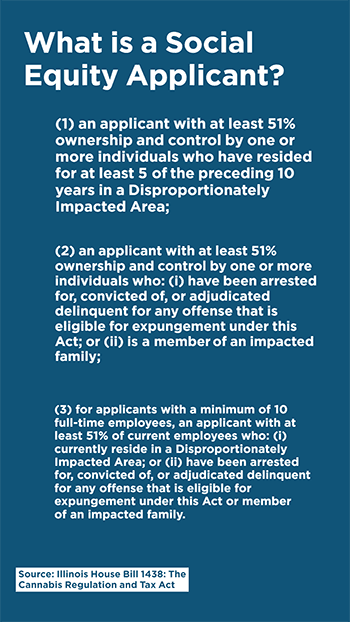
Some recently laid-off workers in Illinois had been expecting a decision on their adult-use dispensary license application on May 1. Now, they’ll have to wait a while longer, since Illinois regulators announced April 29 the decision to delay awarding 75 licenses because of the COVID-19 pandemic.
Ambrose Jackson, CEO of social equity applicant Parkway Dispensary, said his team of 12—some of whom lost their jobs during the pandemic—are eager to start building their company. The state’s decision comes as Illinois adult-use cannabis sales have well exceeded $100 million since Jan. 1, when adult-use retailers who had already been operating as medical providers and are majority white, began selling to Illinois residents and out-of-state consumers.
“As a minority myself, we're used to getting the short end of the stick, so there is nothing that's surprising about what's going on,” Jackson said. “I think the unique thing is that there seems to be perhaps a little bit of an olive branch. And from taking that stance, I think it's important that you’re a local advocate for the things that are not going right and the things that you can see as still working against the better interest and may not actually even be fair at all.”
Through its social equity program, the state may eventually award up to 20% of individual dispensary license application points to eligible social equity applicants. And existing operators in the state have aided applicants; for instance, Cresco Labs offered resources to Parkway through its Social Equity & Educational Development program, which Jackson said was a “positive experience.”
Jackson said he feels state officials are offering some reconciliation for the disproportionate number of marijuana-related arrests and incarcerations in minority communities. At the same time, he hopes officials at the Illinois Department of Financial and Professional Regulation, which will issue the licenses, looks at who those applicants are and makes sure they didn’t add someone to their team just to take advantage of extra points.
Additional steps in Chicago
Parkway plans to begin cannabis retail sales via a shop in Bronzeville, an African-American Chicago neighborhood with a high poverty rate.
This week, the Illinois Department of Financial and Professional Regulation planned to award 75 new adult-use dispensary licenses, but will now wait until the governor’s disaster proclamation expires. Elsewhere, Canopy Growth announced 200 additional layoffs in Canada, the U.S. and the UK in the Canadian LP’s latest phase of scaling back its operations.
Here, we’ve rounded up the 10 headlines you need to know before this week is over.
Federal: Multistate cannabis operator Cresco Labs announced this week that it has reached a mutual agreement to terminate its acquisition of assets from Tryke Companies, LLC. “Our acquisition of Tryke has been impacted by regulatory delays, a decline in capital markets, and now COVID-19, which brought additional risk to this transaction,” CEO and Co-Founder Charlie Bachtell said in a public statement. “Given these events, we feel the resources previously targeted for this transaction are better invested in our existing markets, where we have high visibility and certainty of return on capital.” Read moreThe U.S. Food and Drug Administration (FDA) has sent warning letters to two CBD companies to stop marketing CBD as an opioid addiction treatment. “The opioid crisis continues to be a serious problem in the United States, and we will continue to crack down on companies that attempt to benefit from selling products with unfounded treatment claims,” FDA Principal Deputy Commissioner Amy Abernethy said in a prepared statement. Read moreNew Jersey: Voters will get to decide whether to legalize adult-use cannabis in the Garden State this November, and a new poll conducted by Monmouth University indicates that legalization has strong support. Sixty-one percent of roughly 700 registered voters who participated in the poll said they would vote in favor of legalization, while 34% said they would vote against it. Read moreCalifornia: The state’s cannabis growers spend an average of $136 per pound of dried cannabis flower on testing costs, researchers at the University of California, Davis, found. In a new study, researchers with the public Californian university found that testing costs accounts for approximately 10 percent of the reported average wholesale price for cannabis in the state. Read moreCalifornia officials have announced that a sales tax extension and a $50,000 bridge loan are available to small business owners working in the cannabis industry. Gov. Gavin Newsom signed the 90-day extension into law last month, giving small business owners until late July to file and pay their first-quarter sales taxes, and on top of that, small businesses may keep up to $50,000 of their sales tax payments for a year, effectively using the cash as a no-interest bridge loan between now and next summer. Read moreMaine: The Portland City Council voted this week to allow the city to issue temporary cannabis testing lab licenses in an effort to ensure a quick launch of Maine’s adult-use cannabis market after the COVID-19 pandemic. The unanimous vote allows prospective testing labs to apply for a temporary local license, which would then allow the facility to pursue a final state license. Read moreColorado: Denver has established a working group to issue recommendations on the city’s cannabis policies and licensing process. In an April 27 memo, the city’s Department of Excise and Licenses announced the Marijuana Licensing Work Group (MLWG), a 24-member advisory board made up of industry and community stakeholders who will “review, discuss, and make recommendations on policy direction and possible marijuana licensing laws, rules and regulations.” Read moreMassachusetts: An appeals court has sided with Cambridge in a lawsuit over the city’s cannabis licensing moratorium. Revolutionary Clinics, a licensed medical cannabis dispensary that has been operational since 2018, sued Cambridge last year over a city ordinance that allows only economic empowerment applicants to receive adult-use dispensary licenses for the first two-years of the licensing process in an attempt to ensure those disproportionately impacted by prohibition have access to the industry. Read moreIllinois: Regulators announced this week that they will delay issuing new adult-use cannabis dispensary licenses due to the COVID-19 pandemic. The Illinois Department of Financial and Professional Regulation planned to award 75 new adult-use dispensary licenses May 1, but will now wait until the governor’s disaster proclamation expires. Read moreCanada: Canopy Growth has announced 200 more layoffs in Canada, the U.S. and the UK in the Canadian LP’s latest phase of scaling back its operations. “Although difficult, the decisions that have been made over the last few months are to allow Canopy Growth to remain focused on the areas where we are winning and ensure that we are delivering the highest quality products to our consumers in every market where we operate,” CEO David Klein told Yahoo Finance Canada. Read moreAny brand can claim that their cannabis products are “lab tested.” But this doesn’t really mean anything unless they provide access to third-party lab results.
By “third-party” we’re referring to a lab that is completely independent of the producer.
These results can provide you with proof that the product you’re buying is as claimed, with respect to potency, purity, and safety.
Some producers publish results on their product packaging, although depending on region-specific labeling laws, this information is likely to be limited.
Click here to read the complete article
Economic activity in Canada's legal pot industry tripled since legalization: StatsCan.
Canada's cannabis industry generates about $8.16 billion to the country's economy, according to latest data from Statistics Canada.
The legal cannabis industry contributed about $3.96 billion to Canada's gross domestic product as of February, StatsCan said.
That's up 215 per cent since recreational cannabis was legalized in Oct. 2018.
Click here to read the complete article
DNA Genetics, a global cannabis breeding brand based in California, has spent the past year working with Copperstate Farms in Arizona, honing chemovars that will soon be introduced to the state’s medical patient base.
Rez Khan, DNA’s vice president of global corporate development, says that the company’s licensing platform allows his team to provide proprietary genetics in return for a royalty on future sales.
Copperstate Farms, which owns retail storefronts under the Sol Flower brand, fit the bill for what DNA seeks in prospective partners. Khan says that his team scouts other companies for their market penetration in a given state, conducting a business analysis on the management team and an operational analysis on the cultivation team and the facility itself. It’s part of a broad quality assurance and quality control protocol that DNA maintains in all partnerships.
“We want to make sure that we’re at least internally setting up SOPs that we can stand by for products that are going to hit the market, so they’re not grown with stuff that we would never [use to] grow in our own gardens,” Khan says.
DNA co-founders Don Morris and Aaron Yarkoni traveled to Snowflake, Ariz., with three of their top cultivation experts to work in Copperstate’s 40-acre greenhouse.
Morris and Yarkoni oversaw the genetics selection from seed. Rather than starting with clones, this process allowed the DNA and Copperstate teams to stretch out a bit and really hone the phenotypes that would be most optimal for the genetics they were working with.
New Zealand’s government has revealed the final details of a marijuana legalization proposal that will appear on the September general election ballot.
Voters will decide on the policy change through a referendum, where they will be asked “yes” or “no” to approving the “Cannabis Legalisation and Control Bill.”
Early details about the measure were released in December.
And on Friday, the government shared the full proposal, which would make it legal for adults 20 and older to purchase and possess cannabis, cultivate two plants for personal use and visit marijuana “coffee shops” where on-site consumption would be allowed.
Click here to read the complete article